3月30日,《数业之光:解码企业新活法》


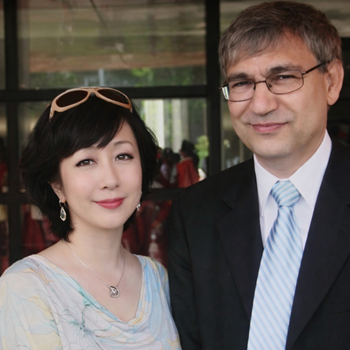
我渐渐不再相信,故乡是一块可以被指认的土地。它更像隐秘的存在——一种在血液中流淌的祈祷,一种在灵魂深处缓慢生长的形而上回忆。它并不属于空间,而属于时间与意识的交界之处,像一层若隐若现的雾,既遮蔽真实,又召唤真实。
在某些黄昏,当光线开始失去重量;在某些雨声里,当世界变得柔软而迟疑;在某些灯影摇曳之中,我会忽然感到,故乡并未远去,它只是改变了存在的方式。
写作,于是成为一种回应——不是对现实的回应,而是对这种隐秘召唤的回应。它更像是一种被命定的聆听,一种对不可见之物的持续凝视。
读你的文字时,我第一次意识到,忧郁不仅是情绪,它更接近精神的维度,一种几乎带有神性的气质。你所书写的伊斯坦布尔,并不仅仅是一座城市,而是一种被历史祝福又被历史遗弃的存在——它像一位沉默的见证者,在时间的废墟之上,守护着人类无法完成的告别。
那一刻,我意识到,我所感知的上海,也在以另一种方式存在着。
你的街道,你的海峡,那些褪色的帝国记忆,与我记忆中的弄堂、石库门、梧桐树影,并不真正分属于不同的世界。它们在更深的层面上彼此呼应,仿佛来自同一个隐秘的源头——那是人类对于“曾经”的执念,对于“失去”的凝视。
然而,上海拒绝承认这种忧郁。
它以光掩饰影,以速度覆盖迟疑。它不断向未来投射自身,仿佛只有前行,才能避免回望。但正是在这种繁华与明亮之中,忧郁反而变得更加隐秘,更加深沉。
在那些被忽略的角落里,在时间无法完全触及的缝隙中,我依然能够感受到难以好好地告别,既不属于过去,也不属于现在的存在状态。
如果说,你的城市在失落中形成灵魂,那么我的城市,则在覆盖之中孕育灵魂。它不是遗失,而是一种层层叠加的存在——过去并未消失,而是被压入更深的维度,像沉入海底的光,仍在不可见之处闪烁。
于是我开始明白,所谓文化的边界,并不在地理之上,而在意识之中。东西方的交界,不是冲突,而是一种持续的凝视——一种既想靠近又无法完全抵达的状态。这种状态,使人保持清醒,也使人注定孤独。
因为在这凝视之中,我们不断看见自己,又不断失去自己。
我曾站在黄浦江边,长久地注视水面。对岸的灯火如同虚构的星辰,而江水却保持着一种古老的沉默。那沉默像一种深层的语言,一种拒绝被翻译的真实。在那一刻,我忽然意识到,两座城市正在彼此凝视。
伊斯坦布尔在历史之中回望,上海在未来之中前行。一个沉入记忆,一个奔向遗忘。而我,站在两者之间,成为一种过渡的存在。
或许,这正是我们的命运。
我们不再生活在线性的时间之中,而是在不断闪回的意识中存在。过去与现在交叠,真实与记忆闪回。我们并不真正“经历”世界,而是在碎片之中重组世界。
而写作,正是这种重组的仪式。
它近乎一种世俗的祈祷,在破碎之中寻找意义,在沉默之中召唤声音。你以“忧郁”为城市命名,使其获得灵魂;而我,则试图在忧郁之中,寻找一种新的象征。
那象征不再属于某一文明,而属于一种临界的存在,一种在边界之上重生的自我。它既不稳定,也不完整,却因此更加真实。
它像阳光,折射存在。它让我们看见,所谓故乡,并非某一地点,而是一种意识的归属:在分裂与漂移之中,短暂形成的河流。
或许,真正的故乡,从来不是可以返回的地方,而是一种我们在不断迷失中偶然抵达的状态。在你的文字中,我看见了这种状态的深度,几乎接近神性的沉思;而在我的书写中,我只是试图靠近它的边缘,在光与影之间,触摸它的轮廓。
当伊斯坦布尔的雾,与上海的灯光在意识中交汇时,我明白:忧郁是一道门。
一道通向理解的门,一道通向存在本身的门,一道通向高贵的门。
而我们,既是行走者,也是见证者。我们在这条缓慢而无尽的路径上前行。为了在行走之中,逐渐成为我们自己。 Bei La:Melancholy as a Noble Temperament — A Letter to Pamuk
I have gradually ceased to believe that one’s homeland is a place that can be pointed to on a map. It feels, instead, like a hidden presence—something akin to a quiet prayer echoing in the bloodstream, a metaphysical memory that grows slowly within the soul. It belongs not to space, but to the threshold between time and consciousness, like a thin mist that both veils reality and summons it into being.
At certain dusks, when light begins to lose its weight; in the sound of rain, when the world softens into hesitation; in the trembling of distant lamps, I sometimes feel that my homeland has not vanished—it has merely altered its mode of existence.
Writing, then, becomes a form of response—not to reality itself, but to this quiet invocation. It is not a choice, but a kind of calling: a sustained act of listening, a gaze fixed upon what cannot be seen.
When I read your work, I came to understand for the first time that melancholy is not merely an emotion. It is a dimension of the spirit, a temperament that borders on the sacred. The Istanbul you write is not simply a city, but a being at once blessed and abandoned by history—a silent witness standing upon the ruins of time, guarding the unfinished farewells of humanity.
In that moment, I realized that Shanghai, too, exists in another form.
Your streets, your strait, those faded imperial memories—they do not truly belong to a distant world from mine. They resonate, at a deeper level, with the alleyways, the stone-gated houses, the plane trees of my own recollections. As if they emerged from the same hidden source: the human longing for what has been, the persistent gaze toward what has been lost.
And yet, Shanghai refuses to acknowledge its melancholy.
It conceals shadow beneath brilliance, hesitation beneath speed. It projects itself endlessly into the future, as if forward motion alone could absolve it from the necessity of remembrance. But it is precisely within this excessive brightness that melancholy becomes more elusive, more profound.
In the overlooked corners, in the fissures where time cannot fully reach, I still sense an unfinished farewell—a state of being that belongs neither to the past nor to the present.
If your city derives its soul from loss, then mine draws its essence from layers of concealment. It is not that memory disappears, but that it is pressed deeper, sedimented beneath successive surfaces of new splendor—like light submerged beneath the sea, still flickering in unseen depths.
I have come to understand that the boundaries between cultures do not lie in geography, but within consciousness itself.
The meeting of East and West is not conflict, but a sustained act of looking—a state of simultaneous approach and impossibility. It sharpens awareness, and yet condemns one to solitude.
For in this gaze, we continually encounter ourselves—and continually lose ourselves.
I once stood for a long time by the Huangpu River, watching the water. Across the river, the lights gleamed with an almost unreal brilliance, while the current beneath remained ancient and silent. That silence was not emptiness—it was a deeper language, one that resists translation.
In that moment, I felt that two cities were gazing at one another.
Istanbul, looking backward into history.
Shanghai, rushing forward into the future.
One immersed in memory, the other in forgetting. And I, standing between them, became a transitional being.
Perhaps this is the fate of our generation.
We no longer live within linear time, but within a consciousness of recurring flashes. Past and present overlap; reality and memory mirror one another. We do not simply experience the world—we reassemble it from fragments.
And writing is the ritual of that reassembly.
It resembles a secular prayer: seeking meaning within fracture, summoning voice from silence. You named your city through melancholy, and in doing so, granted it a soul. I, in turn, attempt to discover within melancholy a new symbol.
A symbol that belongs neither to East nor to West, but to a liminal state of being—something unstable, incomplete, and therefore more truthful.
It is like a mirror, though it reflects not reality but existence itself. It reveals that homeland is not a place to which one returns, but a condition of awareness—something briefly attained in the midst of fragmentation and drift.
Perhaps the true homeland is never somewhere we can go back to, but something we encounter, fleetingly, in the act of losing our way.
In your writing, I perceive the depth of this realization—a meditation that borders on the sacred. In my own, I merely attempt to approach its edge, to trace its outline between light and shadow.
And when the mist of Istanbul and the lights of Shanghai converge within the mind, I finally understand:
Melancholy is not an end.
It is a threshold.
A threshold toward understanding. A threshold toward being itself.
And we are both travelers and witnesses upon this slow, unending path—
not in order to arrive,
but to become, in the act of walking, who we are.

3月30日,《数业之光:解码企业新活法》
2026年前后,福州市第一总医院、福州市
近日,被誉为“中考语文天花板”、拥有线下
在数字金融浪潮席卷全球的今天,如何安全、
【综合报道】近日,作家贝拉以中日英三国语
在A
3月22日,春分刚过,上海外滩的江水映照
春意
德国高端刀具品牌Topinox正式登陆中